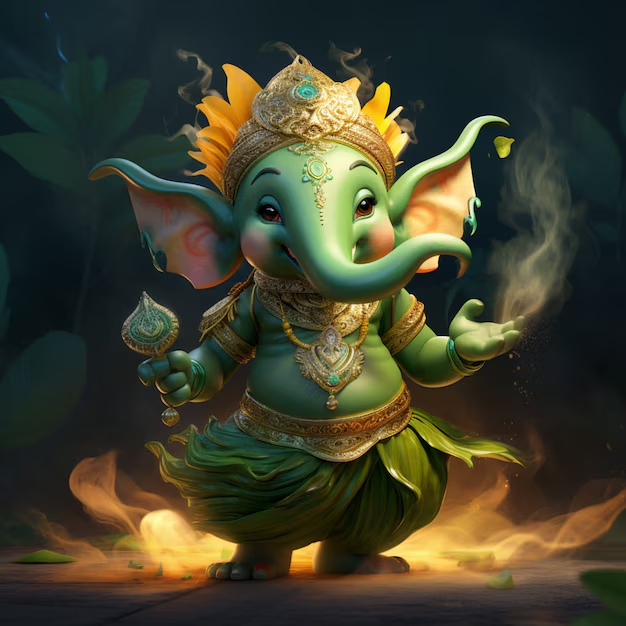
Lord Ganesha: The Remover of Obstacles and the Symbol of Wisdom
Ganesha is one of the most revered and beloved deities in Hindu mythology. He is recognized as the remover of obstacles, the god of beginnings, and a symbol of wisdom, intellect, and prosperity. Known for his distinct elephant head and large belly, Ganesha is worshipped by millions of devotees across the world, particularly in India. His significance transcends religious boundaries, and his presence is felt in homes, temples, and festivals alike.
In this blog, we will dive deep into the unique facts about Ganesha, exploring his origin, symbolism, and why he holds such a pivotal place in Hindu culture.
Who is Lord Ganesha?
Lord Ganesha also known as Ganapati, is the son of Lord Shiva and Goddess Parvati. He is often referred to as “Vighnaharta,” which means the remover of obstacles. He is worshipped at the beginning of all rituals and ceremonies as he is believed to ensure that things proceed smoothly and without any hindrance. His elephant head, coupled with his human body, symbolizes wisdom, understanding, and a discriminating intellect that one must possess to attain perfection in life.
Why Does Lord Ganesha Have an Elephant Head?
One of the most famous stories explaining the origin of Ganesha’s elephant head is the tale of how he was created by Goddess Parvati. According to legend, Parvati created Ganesha from the dirt of her body to guard her while she bathed. When Lord Shiva returned and tried to enter, Ganesha, unaware of who he was, stopped him. Enraged, Shiva beheaded Ganesha. Upon realizing his mistake, Shiva restored Ganesha’s life but with the head of an elephant, which he had taken from the first creature he found.
The elephant head of Ganesha symbolizes wisdom, and his large ears represent the ability to listen to all that is heard and retain knowledge.
Symbolism Behind Lord Ganesha’s Form
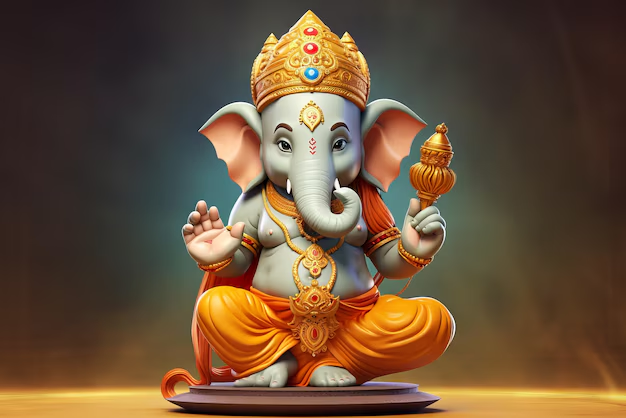
Each part of Ganesha’s form holds symbolic significance, representing different virtues and lessons that devotees can learn from.
Elephant Head: Signifies wisdom, intelligence, and a sharp mind.
Large Ears: Represent the importance of listening carefully and absorbing knowledge.
Small Eyes: Indicate concentration and the ability to see beyond the obvious.
Trunk: Denotes adaptability and efficiency, capable of performing both delicate and heavy tasks.
Large Belly: Symbolizes his ability to digest both the good and bad in life and remain calm.
Mouse (Vehicle): Represents the desire, and Lord Ganesha rides on it, symbolizing the importance of controlling desires.
Important Facts About Ganesha
Lord of Beginnings: Lord Ganesha is always worshipped first in any Hindu ritual, as he is considered to bring good fortune and remove obstacles.
Patron of Arts and Sciences: Besides being the remover of obstacles, Ganesha is also associated with wisdom, literature, and the arts. This is why scholars and artists worship him before starting any intellectual or creative task.
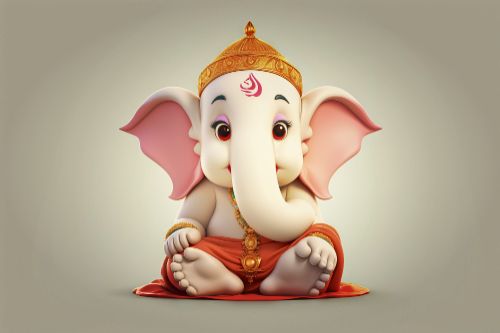
Multiple Forms: Ganesha has 32 different forms, each representing a unique aspect of life. Some of his famous forms include Bala Ganesha (the child Ganesha), Heramba Ganesha (the compassionate Ganesha), and Gajavaktra (the elephant-faced Ganesha).
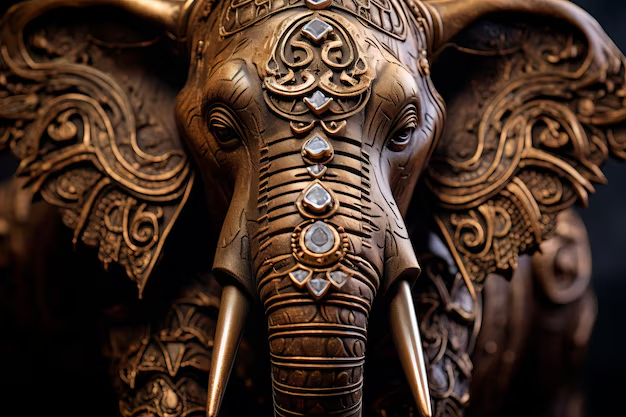
Ekadanta: One of Lord Ganesha’s prominent titles is “Ekadanta,” meaning “one-tusked.” According to mythology, Ganesha broke one of his tusks to use as a pen when writing the epic Mahabharata as dictated by Sage Vyasa.
Ganesha’s Favorite Offerings: Lord Ganesha is known to love sweets, particularly modaks. It is believed that offering modaks to Ganesha during worship brings good luck and blessings.
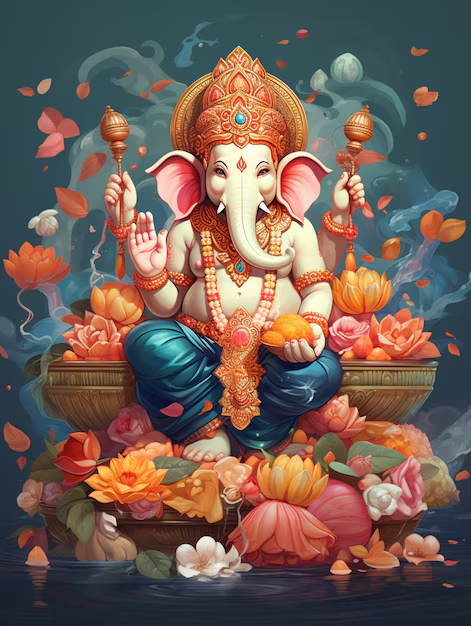
Ganesh Chaturthi: The most widely celebrated festival for Ganesha is Ganesh Chaturthi, a 10-day event marked by elaborate decorations, processions, and rituals. This festival commemorates Ganesha’s birth and is celebrated with great enthusiasm across India, especially in Maharashtra.
FAQs About Ganesha
1. Why is Ganesha worshipped first?
Ganesha is worshipped first in any ceremony because he is the remover of obstacles. By invoking him at the beginning, devotees believe that he clears the path for success and smooth functioning of the event or task
2. What does Ganesha symbolize?
Ganesha symbolizes wisdom, intellect, and prosperity. He is also a symbol of beginnings and endings. His form is a reminder of virtues like humility, patience, and the importance of inner balance.
3. Why does Ganesha ride a mouse?
The mouse, or Mooshak, represents human desires. By riding on a mouse, Ganesha signifies control over desires and the ability to remain focused on higher goals in life.
4. How many forms of Ganesha are there?
There are 32 forms of Ganesha, each representing a unique aspect of life. These forms highlight various attributes such as strength, compassion, and wisd
5. What is the significance of Ganesha’s broken tusk?
The broken tusk symbolizes sacrifice and the willingness to give up something valuable for the greater good. It is said that Ganesha broke his tusk to use it as a pen to write the Mahabharata
6. What is the story behind Ganesh Chaturthi?
Ganesh Chaturthi celebrates the birth of Lord Ganesha. According to legend, it is the day when Ganesha first appeared to bless the earth. The festival is marked by prayers, offerings, and the installation of Ganesha idols, followed by their immersion in water
Interesting Stories about Ganesha
There are countless stories and myths surrounding the life and deeds of Lord Ganesha. Here are two of the most popular ones:
1. The Story of Ganesha and the Moon
Once, Ganesha was returning home after a grand feast, riding his mouse. The mouse stumbled, and Ganesha fell to the ground. The moon, upon seeing this, laughed at Ganesha. Angry at the moon’s arrogance, Ganesha cursed the moon, saying that anyone who looked at the moon would be falsely accused of something. This is why it is considered inauspicious to look at the moon on Ganesh Chaturthi
2. Ganesha’s Race Around the World
Once, Lord Shiva asked his sons, Ganesha and Kartikeya, to race around the world, with the winner being the first to return. Kartikeya quickly set off on his peacock, while Ganesha, knowing that he could not outrun his brother, calmly circled his parents, Shiva and Parvati, saying that they were his world. Impressed by his wisdom, Shiva declared Ganesha the winner.
The Influence of Ganesha Beyond India
Ganesha is not just revered in India but has followers around the globe. His worship extends to countries like Nepal, Thailand, Indonesia, and Cambodia. In fact, the Balinese Hindu community in Indonesia celebrates Ganesha in many temples, blending Hindu and Buddhist influences.
Conclusion: The Timeless Significance of Lord Ganesha
Ganesha’s timeless relevance in both spiritual and practical life makes him a beloved deity. From his elephant head to his mouse vehicle, every aspect of his form and every story associated with him offers deep lessons about life, wisdom, and devotion. Whether you’re seeking success in a new endeavor or simply wish to remove obstacles from your path, invoking Lord Ganesha is believed to bring positivity, wisdom, and clarity.
Incorporate his teachings into your life, and you’ll not only remove hurdles but also cultivate the wisdom to navigate life’s challenges gracefully.
Sports lovers click here for sports articles.
Individuals seeking work-from-home opportunities and ways to earn money online can now capitalize on promoting affiliate programs with ySense — a straightforward platform designed for easy earnings
2 thoughts on “Lord Ganesha: The Remover of Obstacles and the Symbol of Wisdom”
Very good article 😎💯💯Super Duper 🔥Aag Laga di 🔥🔥
No one super duper